
The Whitechapel Poppets: An Unusual Victorian Response to Jack the Ripper
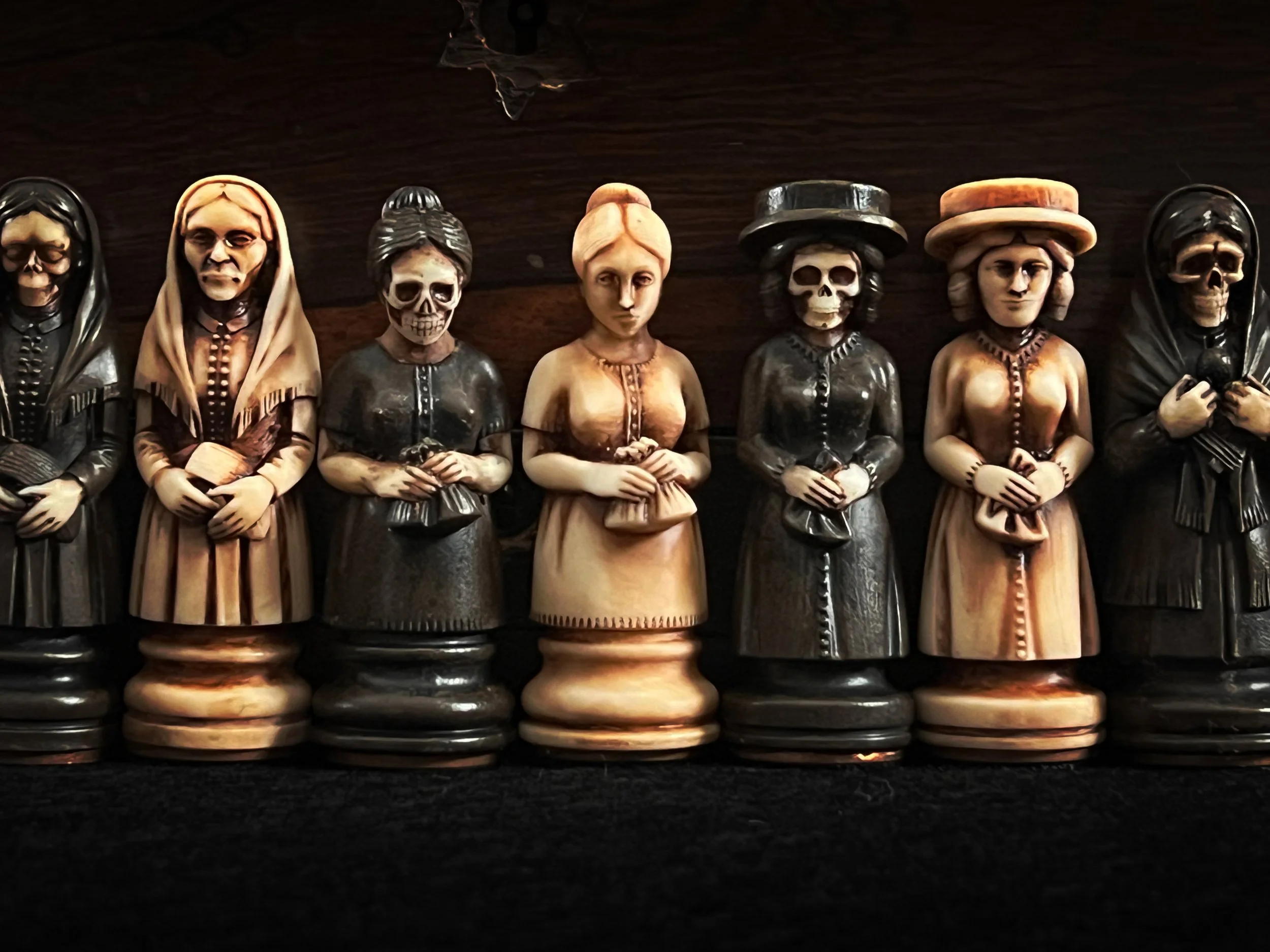
In the aftermath of the Whitechapel murders, most attention has understandably focused on press sensationalism and the identity of Jack the Ripper. Less discussed are the quieter, more human responses that emerged at street level, and how ordinary people chose to process the horrors happening around them.
One of the more unusual accounts from that period centres on a series of small, hand-carved figures that began circulating through parts of the East End. Now commonly referred to as the Whitechapel Poppets, these objects were reportedly made in the likeness of the victims and sold within the local community. Their purpose appears to have been twofold: part memorial, part fundraising effort for the families left behind. In an area already defined by hardship, this kind of informal support wasn’t unusual. What was unusual was the form it took.
The Meaning of a “Poppet”
The term poppet has older roots in European folk tradition, and generally refers to a small effigy used to represent a person. Contrary to popular assumptions, these objects weren’t inherently sinister—they could be used for protection, healing, or symbolic acts tied to intention.
By the late Victorian period, Britain was experiencing a quiet but notable spiritual revival. Alongside the rise of séances and parlour mediumship, older folk practices hadn’t entirely disappeared—particularly in poorer districts where transient communities, travelling families, and the lingering influence of cunning folk traditions still held sway. In these environments, ideas surrounding sympathetic magic and effigies weren’t relics; they were part of a living, if subdued, belief system.
Within that context, the appearance of poppet-like figures in Whitechapel feels less out of place than it might at first seem.
Whether they were created purely as memorial objects or carried some additional layer of intention is impossible to say with certainty. But the terminology, and the associations it brings, suggest that these figures may have occupied a space somewhere between remembrance and something more functional.
Small Objects, Larger Context
Descriptions of the poppets vary. Some are said to have been crude and fragile, simple carvings knocked together from whatever materials were available, typically wooden pegs or bone. Others, however, suggest a more practised hand, with attention given to proportion, balance, and finish.
That split in quality has led to speculation about their origin. There are indications that some of the figures may have come from a more experienced source, possibly a London chess-piece maker.
Victorian London had a well-established trade in small carved goods, particularly chess sets. Using hardwoods such as boxwood and ebony, makers would turn and polish each piece to a consistent standard. The introduction of the Staunton design in the mid-19th century pushed that craft further, turning what had once been functional items into finely detailed objects.
It’s not difficult to see the overlap. The skillset, the materials, even the scale all line up. What may have started as a local, improvised response appears, at least in part, to have been taken up by a professional hand, becoming one of the main sources of these figures during that time.
Expanding Beyond the Victims
Initially, these figures appear to have focused on the victims themselves, basic attempts to preserve identity in a situation where individuals were rapidly reduced to headlines. But as public interest in the case intensified, so too did the subject matter.
There are accounts of poppets depicting other figures connected to the investigation, including Frederick Abberline, one of the lead detectives on the case, alongside more speculative representations of the killer himself.
Whether these were intended as commentary, opportunistic merchandise, or something closer to folk expression is difficult to pin down. As with much of the material surrounding Whitechapel in 1888, the line between documentation and embellishment is far from clear.
From Memorials to Collectables
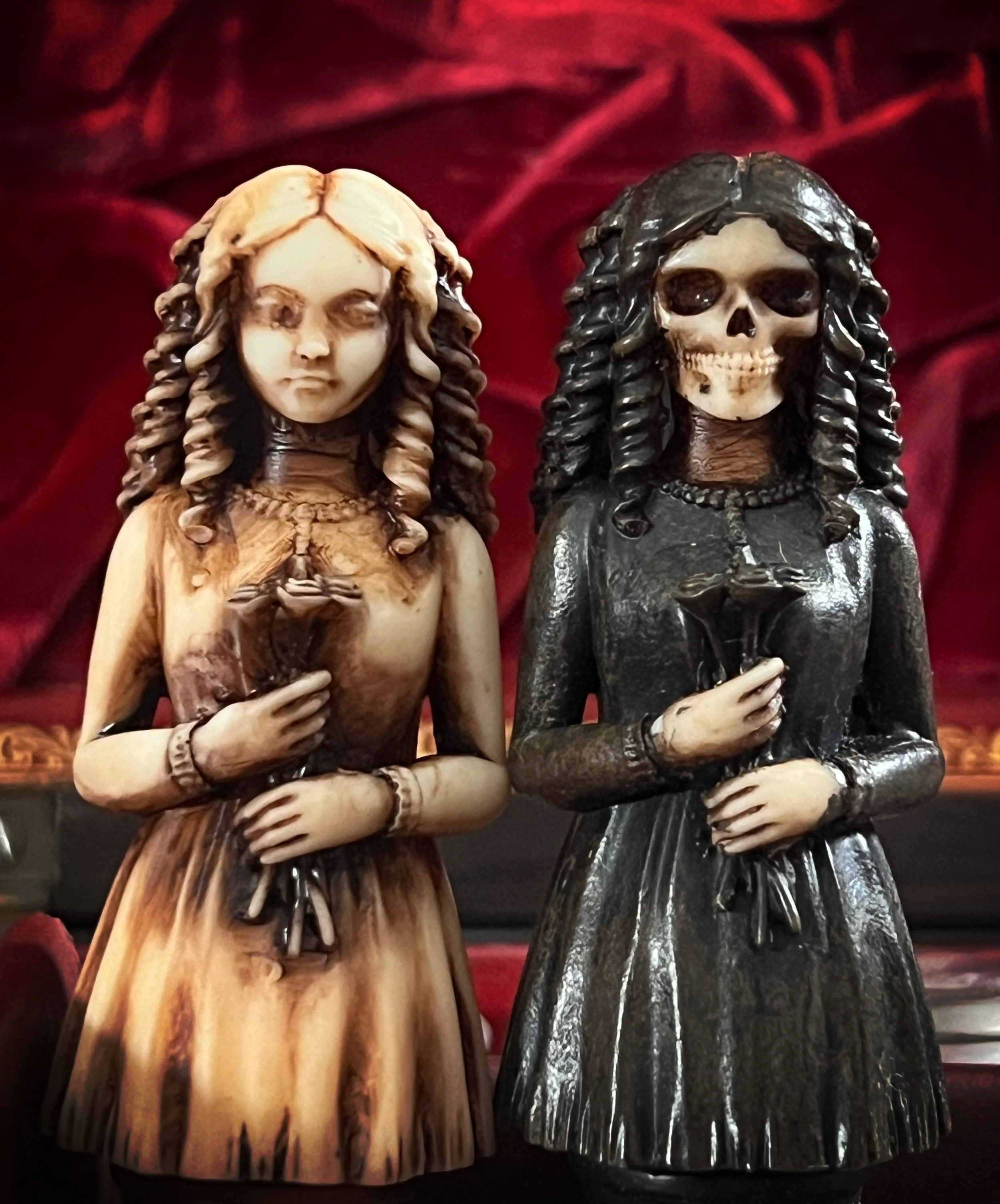
What began as a practical gesture shifted over time into something else. Accounts suggest that the poppets became sought after beyond their original purpose, circulating more widely and changing hands as curiosities.
In that sense, they occupy an odd position in material culture, arguably an early form of collectable tied to a real-world event. Strip away the context, and the behaviour around them isn’t a million miles off what we see today in modern collectable markets, not unlike a Victorian precursor to the Funko Pop! craze.
And yet, despite that supposed popularity, they are notably scarce. Very few confirmed examples have surfaced. Thames mudlarkers have reportedly recovered a handful of objects attributed to the poppets. These people search the riverbanks at low tide for historical artefacts that have been lost or discarded over the centuries. Their finds typically include clay pipes, coins, and fragments of everyday life in London throughout history. But when it comes to the poppets, the record is unusually thin. For items that were, by some accounts, widely circulated, their absence from both public collections and private holdings is striking. Could this be down to the fragility of the materials, the way they were used, or simply the passage of time?
A Modern Revival
Today, the idea has been revisited by a UK maker operating under the name Bone & Briar Poppet Works.
Working in natural materials and drawing heavily on period aesthetics, the pieces echo the same visual language, hand-crafted figures presented less as products and more as artefacts. While the Whitechapel series is a core part of the range, the broader work draws on folklore, occult history, and culture.
Between History and Interpretation
The Whitechapel Poppets occupy an awkward yet compelling space.
At a distance, they can be explained away as practical objects born of hardship, small carvings made to raise a few coins and to remember the dead. But look a little closer, and they begin to pick up weight: folklore, suggestion, and the kind of meaning that tends to gather around mysterious objects people still don’t quite understand. In that sense, they share a quiet similarity with the Arthur's Seat coffins, folkloric objects whose purpose has never been definitively agreed upon, and whose true meaning slips just out of reach as time moves on.